


Let’s Practice That- Teaching and Modeling Proper Behavior
Let’s practice
 Kids don’t intuitively know how to behave, they would behave like wild little wolf cubs, if let to their own devices.
They make mistakes and are impulsive. Children learn a lot from watching parents and in how the parents react to them whether good or bad. “Let’s Practice” is concentrated modeling of behavior. It takes time and you may even think this is tedious, but it works and it will pay off!
Example:
My daughter took a toy away from her sister and made her cry. B had her toy and K didn’t want her to play with it!
Intervene
I don’t believe in letting kids work it out, especially when they are young. I wanted my children to grow up and be friends and be able to interact with others in healthy ways. (Most of my kids are now in their 20s and they are friends with one another.) Kids don’t know how to work it out, when they have never been guided in how to do that. They don’t have the skills.
Typically the way kids work things out ends in either a lose/lose or win/lose situation. If you teach them when they are young you don’t need to interfere when they are older.
Explain
We explained to K that it was unacceptable for her to treat her sister that way. (Even if the toy was hers!) We talked to her about why she took the toy and how she would feel if someone did that to her.
I even pointed to the tears on her sisters face and talked about how sad she was that her sister grabbed something from her and how it hurt her feelings. “K, you don’t want to make your sister sad; she loves you and you love her.”
K said it also hurt her feelings that B would take her things without asking. To which we talked to B about how it makes K feel when she takes without asking. K often helped with the reasons why she wanted the toy: it is mine, I want to play with it, I’m afraid you will break it or hurt it in some way.
Modeling

Playing with the girls and their toys helps them to learn how to play nicely and respect one another’s things.
Next, we practice: First, parents model how to ask and how to react. Practicing with yes and no answers. In the case of younger child having older child’s toy: if the answer is no, what do you do when you need to get that toy, so they don’t break it? We practiced how to reason with the younger child. One tactic is to find something the younger child would willingly trade. Sometimes the solution is for the older one to play with little sister or to show her how to do something with the toy.
Practice
After parents model (with one another or with children), then they practice with one another.
We would either use the same toy or get a “practice toy”. The toy used depends on the attitude of the children and where they are emotionally. Sometimes they are so focused on the particular item that it is a distraction to the learning and so a practice toy works better. If a practice toy is used, then a last practice with the difficult item is worth a try.
Sometimes, we would have to remind the younger child that we are practicing. (Her instinct, once she had the much desired toy in her grasp again, was to hug it to her body and keep anyone from having it.) Soon, she would think it was a fun game. They enjoy asking, saying yes and giving the toy back and forth. Switching roles is also helpful where the younger child asks the older one if they can play with their toy. If the answer is no, we talk about what they can do instead: play together, find an acceptable alternative, etc.
Practicing yes and no answers helps them to not expect that the answer will always be yes. They also learn what to do when the answer isn’t what they want to hear.
Time to say sorry
We would then encourage “K” to apologize for grabbing the toy away. We strongly encouraged our children to;
- Say “I am sorry” and
- Say what you are sorry for: “for grabbing the toy away from you”.
Then, we would have younger sister apologize for her part in the problem: “I’m sorry I took your toy”.
Apologies should always include what they are sorry for. If both played a part in the problem, both should offer apologies.
It Works!
Our oldest daughter quickly caught on. Only once or twice doing this type of thing and she was problem solving herself. There was less fighting and more cooperation.
It does take time, but the payoff is big!!! They learn effective problem solving and there is less fighting.
We often tried to focus our children to the positive; looking for the good in one another.
Her sister wasn’t bad for wanting to play with her toy or even for taking her toy without asking. Little sister didn’t understand she needed to ask or how to ask and needed to be taught.
Reminders
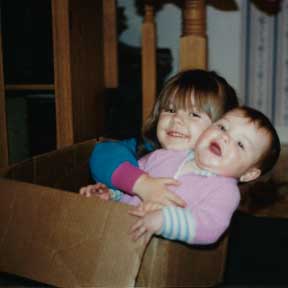
Another good reminder is that we have to play gently with little sister because she is smaller. We are still teaching her how to do many things.
Because they are children, they won’t always remember. Sometimes they need a gentle, reminder: “Did you ask K if you could play with that?” or “What do you think you should do?” “What do you think your sister might like to play with instead?”
I like to think of parents as guides for their children. Life is complex and it is hard to figure out how to get along, especially if you are without help or direction. Parents have the experience and the knowledge for how to do it better. Make sure you are passing your wisdom along.
Other Things to Practice
-
- What to do instead of hitting
- Boundaries (for example: “Don’t go past the mailbox”. Have them practice, showing you they know where the boundary is.)
- Throwing things- practice the right way to treat things, move things, put things away, etc.
- What to say instead of yelling
- What to do when they have something to say but you are busy or talking to someone








 having her go because she is gluten free. We worried that it was too hard for the leaders to do, they wouldn’t want to keep track of her food, they wouldn’t be good with cross contamination, and the expense.
 We communicated with our Bishop, Young Women Leaders and Camp Leader. I expressed my worries about my daughter/s going to camp. They didn’t want her to miss out on camp just because of food. They were willing to do whatever needed to be done to make it a good experience for her.














 My husband and I have always believed that divorce is NOT the answer to our problems. We work out our problems and we have certainly had our share.
 If you are someone who doesn’t want to get divorced and tries really hard to have a good stable marriage then worrying about divorce is a good thing. Now, I’m not talking about excessive worrying or being worried constantly that it is on the horizon. I mean worrying that if you don’t keep your end of the marriage agreement, then it could end.
 If you are okay with everything then nothing will ever be off limits – that works great for the other person but you will become their doormat! It’s important to discuss what behaviors are acceptable what ones are not. Whenever possible, discuss things before there is a lot of emotion and hurt feelings. What ones can you compromise on?
 These are different for everyone and some of the things can be worked on. However, if one person in the marriage is unwilling to work on things the other one will be unhappy (making marriage miserable for both of you) and it will eventually come to an end. People can only put up with so much for so long.



 No matter how you shush or get after them they might not understand what their voices can do. They have to be taught how to hear the differences. Once this happens at church or somewhere where they have to be quiet; you understand that they don’t understand what it is to talk quietly.
  It’s funny that we had to re-learn this with each child. We didn’t notice that they didn’t know how to whisper, until we needed them to; like at church or a movie. I think we thought the younger ones would catch on to how mom and dad and their older sisters whispered, but that wasn’t the case.


 A Talented Gymnast
 I said to my husband, “You better make really good tips!” and then to little “A”, “I guess we will be living with you!”





 Hit in order to teach your child to NOT hit
 So, according to your parent, you can’t hit. . .
  Frustration can be a cause for why a child is hitting, but should not be an excuse. Even adults get so frustrated that they just want to punch someone or something; isn’t that why a parent hits their child who is hitting?! The parent is frustrated with the hitting child and so they hit the child for hitting. This sounds like a vicious circle! Acting out on that frustration models a negative reaction and makes you and your child feel bad.
 I was ready to become a new mom, at least to an extent. I don’t think you can be fully prepared for exactly what it means and feels like to be a first time mom. To hold your newborn baby in your arms and feel the responsibility of being their entire world. You really do, suddenly have the world on your shoulders. It’s the world of the precious child who now depends on you for everything. You, too, are their whole world!
 When I had my second child, I was no longer the mom of an only child. It was terrifying in a different way, than it was having my first. I worried and cried about whether or not I could love my second child as much as my first.
 My oldest had tried dance when she was 3 and hated it! She would ask everyday if today was dance day and when I would say no she would say, “Yeah!” and jump up and down. When I heard the other moms say their daughters asked every day if today was dance and when they said no, their daughters would get sad and sometimes cry. That’s when I knew that dance wasn’t her thing!
 As a gym mom, I often watched practices, went to gymnastics meets, volunteered with fundraisers and other gym events and helped with being the gym photographer. I loved our gym life mostly because it was great to watch my girls excel in something they really enjoyed and did well in.
 We repeated this role 4 times! I would say the last time was the easiest as far as having multiple children in the house goes. What a difference it made having a 10 year old and a 7 year old who were excited about the new baby and eager to help! (The 4 year old wasn’t very helpful and struggled the most in adjusting to a new baby sister.)
 Various sports were tried and during those times I was soccer mom, softball mom, archery, etc. Driving to practices, finding the field, I even
 I love that all of my girls have gotten to do some theater. I directed a play they were in, coached acting, helped memorize lines, run lines, driven to practice, gone to performances, and recorded through pictures and video their experiences.
 At one point, I had 3 teen daughters in the house! It really wasn’t too bad. There is so much hussle and bussle with teens and shuttling them to and fro! When I was a younger mom I didn’t believe mom’s who said they were busier with teens, until I had teens!
 It won’t be long before grandma gets added in as a new role and what a blessed day and time that will be!
 What oldest child hasn’t been called bossy? No matter what you do they tend to want to be a little bossy, but with good reason. They are older and they have learned so much about what to do and what not to do. However, there are probably things you are doing to contribute to their bossiness.
 The oldest child often becomes the helper/assistant. You ask them to get and do things for you, frequently. Parents often become dependent on the oldest child getting up and doing what they themselves don’t want to get up and do. Things they would get up and do with the first child, they delegate to the oldest. Some of this is appropriate. Older kids should learn to help out. I am talking about expecting them to be at your beckon call whenever you want them regardless of what they are doing and what is going on. You want them to stop whatever they are doing and help you, so you can continue your conversation or whatever it is you are doing. What makes you think your child is any different? Demanding that your child come running every time you call; is that how you like to be treated?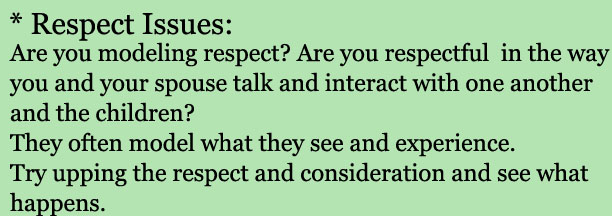
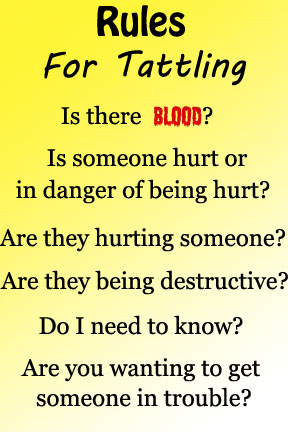



 Let’s start with back talking. Is your child really back talking? Or are they trying to tell you they are overburdened, over whelmed, or frustrated? Remember, this is a child. They don’t have all the years of experience in handling situations. Teach them how to better express themselves and say what they really want and how they feel. They might be having a hard time finding the right words. Tell them you want to listen to them, that they seem upset but being disrespectful is not how you work things out. This just creates more anger, but keep your cool mom and dad. How are they supposed to learn how to communicate better if you just get mad at them and don’t listen?! They may be trying to be heard before they get cut off.
 They might be. Evaluate that. Do they need to be graduated to a new job so the younger one/s can learn to help out too? Do jobs need to be rotated? Are rewards and consequences given out fairly? My oldest daughter once made a comment that made me realize we weren’t giving any chores to the youngest and she was old enough to be doing chores, too. The youngest wasn’t too happy about this being pointed out, but it needed to happen.
 My mom always said she hated 5 year olds! She said they always think they know everything! They aren’t trying to prove to you that they are smarter than you. They don’t necessarily know that you know, what they just discovered. They just learned it and are helpfully passing on their new found knowledge and wisdom.
 I wished this all the time! My mom often told me that I could have had ________________ if I were an only child or if I were the only girl in the family. Hmmm, is it any wonder that there was sibling rivalry in our home?
 Many times it is true, because parents have a tendency to mellow as they get older. You don’t worry as much or about the same things as you have more children. All the worry is focused on that first child and new parents take everything so seriously. We find that some of the things we worried about weren’t as big a deal as we once thought. Sometimes we find better ways of doing things (parenting), the needs are different with other children/personalities, we aren’t as stressed, or even that we are tired (and end up doing less than we should). A child that rarely acts out may not be punished as severely as one that frequently acts out.
 My parents always told me how important my example was to my siblings. Not a bad thing, right. Lots of parents tell their kids this. It is true, to a point. My oldest complained about math and hated it. She was very vocal about her hatred of math. Consequently, all my other girls have struggled with math and claimed they hated it! Even my #3 who is brilliant with math.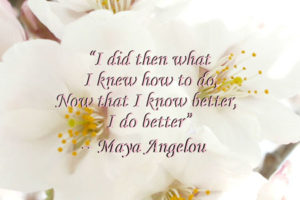



Recent Comments